Why rain scenes in music videos stay with us: the craft and the feeling
Wet streets, backlit rain, rain machines and sound: why rain scenes in music videos linger, plus tips for filming rain on your phone.
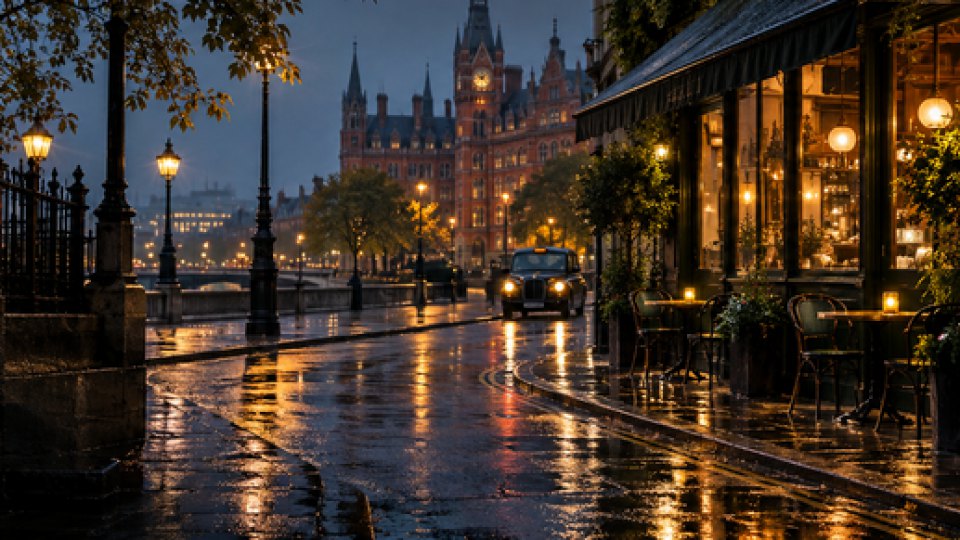
Think back to a few music videos you still remember clearly after many years. Chances are one of them has a rain scene, or at least a wet street smeared with lights. It happens too often to be coincidence: rain solves several problems for image-makers at once, and it touches some very old emotional reflexes in viewers.
Wet streets: an extra layer of light for free
A dry road absorbs most of the light. A wet road acts like a broken mirror: headlights, signs and streetlamps each leave a long reflection on the ground. For night scenes, that means the frame gains depth and colour without the crew adding a single light.
That is why many crews deliberately wet down streets before shooting at night, even when the script has no rain at all. Among cinematographers it is almost routine: a water truck, a few minutes of spraying, and an ordinary street suddenly looks like it belongs in a film.
Real rain rarely shows up on camera, so it gets made
Something few people notice: real rain, especially light rain, barely registers on camera. The drops are too small, fall too fast, and when lit from the front they vanish into the background. So most of the rain we see on screen is artificial, made with rain bars, rain towers or sprinklers above the frame that produce bigger drops than real rain so the camera can catch them.
The second secret is backlight. When a light is placed behind the rain, pointing towards the lens, each drop lights up like a silver thread against the dark. The same rain lit from the front is nearly invisible; backlit, it becomes a curtain. Next time you watch a rainy music video, look: there is almost always a strong light source behind the character.
Shutter speed shapes the raindrops
How rain appears also depends on shutter speed. At the common setting for 24–25 frames per second (around 1/50 of a second), rain becomes long, soft streaks, just as we imagine it. At 1/500 or faster, each drop is “frozen”, sharp as a crystal bead. Combined with high-frame-rate slow motion, you get those shots of suspended droplets that many videos save for the climax.
Why music videos embrace rain more than feature films
Shooting rain is expensive and hard: equipment needs waterproofing, electricity and water are always a hazard, actors get cold, and soaked costumes need dry duplicates for retakes. Feature films have an extra problem: artificial rain is very loud and drowns out dialogue, so the location sound usually has to be thrown away and rebuilt entirely in post-production.
Music videos barely face this. The song covers the whole soundtrack, there is no dialogue to record, so a video crew can pour on the rain freely. The short running time also lets them concentrate the budget on a few big shots. The result is that rain appears in music videos at a rate feature films can hardly match.
Rain as a supporting character for emotion
Literature has the term “pathetic fallacy” for attributing human feelings to nature: it rains when the character is sad, the sun comes out when things are fine. Vietnamese audiences have known this language through poetry for a long time. Music videos use the same vocabulary, and it works because viewers get it instantly, with no explanation needed.
Rain also does some very specific jobs. It hides tears, letting a character cry while we can't be sure whether it's rain or crying. It isolates people: someone standing in the rain without an umbrella looks far lonelier than someone in the sun. And the rain stopping is a ready-made ending, a kind of “washing clean”, which is why so many videos put sunshine after rain in their final seconds. Song titles like Sau Cơn Mưa (“after the rain”) lean on exactly that transition.
Watching rainy music videos like an image-maker
Next time you watch a music video with rain, such as the Mưa Tháng Sáu MV on Tanro Music, ask yourself a few questions: where is the light source, are the drops streaks or frozen beads, does the ground reflect, and in which part of the song does the rain appear? Rain is usually not spread evenly but saved for the chorus or bridge, where the emotion peaks. Listen to the audio version afterwards and notice how the images have attached themselves to the melody.
Filming rain yourself on a phone
- Shoot after dark, positioned so a streetlamp or headlights are behind the rain, shining towards you.
- Look for wet roads, puddles or car windows for reflections; framing low to the ground makes the light streaks longer.
- Use slow motion if you want to see individual drops; normal speed if you want streaks.
- Put the phone in a clear plastic bag or stand under an awning; water and charging ports don't mix.
- Record a few minutes of rain sound separately. Placed very quietly under the music, it makes the footage feel much more real.
If you love the feel of these scenes but want to experience it by ear, music for rainy nights has tips on choosing songs and setting the volume to listen alongside real rain.
- 0회 조회
- 0좋아요
- 0회 공유