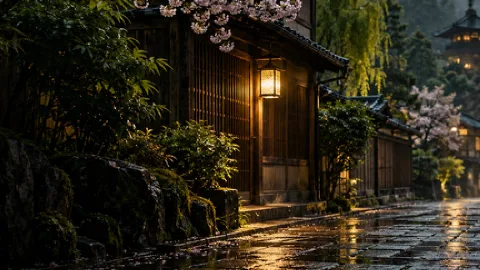
A night in Seoul through music: Korean songs beyond upbeat K-pop
Ballads, drama OSTs, R&B and Hongdae indie: a slow evening of Korean music, with some history and tips for following Korean lyrics before you can read Hangul.
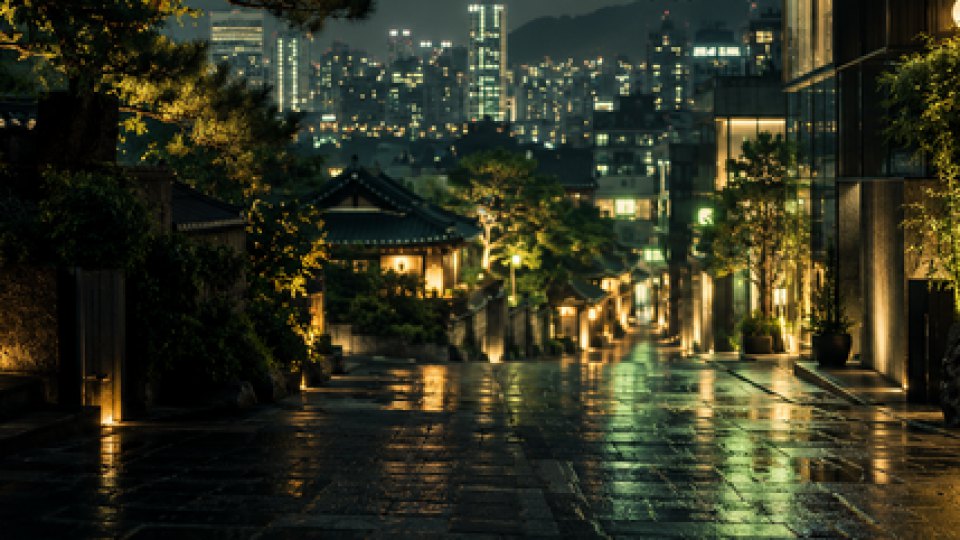
When Korean music comes up, most of us picture large idol groups, synchronised choreography and addictive choruses. That is the most visible part, but the Korean music market is far wider. Spend a whole evening on everything else and you will meet a Seoul that is darker, slower and moodier than anything the idol stage shows.
A little context: Korean music before and after K-pop
Long before “K-pop” became a global brand, the ballad was Korea's main popular genre from the late 1980s on. A clear melody, the voice at the centre, an arrangement that builds from piano or strings to a big climax in the final chorus: that formula is still very much alive, and many ballads still top domestic charts alongside the groups.
In 1992, Seo Taiji and Boys debuted with music that mixed rap, rock and dance, and they are often seen as the turning point that paved the way for modern Korean pop. Meanwhile the older genre of trot, with its characteristic vocal ornaments, kept a loyal audience and saw a strong revival thanks to TV shows in the late 2010s. And around Hongik University in the Hongdae area, small clubs and buskers have nurtured a lively indie community for years.
A bit of context gives the evening a “route”. Here is a suggestion by the hour; adjust it to your mood.
Early evening: ballads to let go of a long day
Around seven or eight in the evening is the best time for ballads. A recognisable trait of Korean ballads is their “uphill” structure: the first verse often has only piano, with the voice low and close; strings and drums come in by the second chorus; and before the last chorus there is often a key change to lift the emotion. Once you spot this pattern, you will hear a Korean ballad like a story with a beginning, middle and end.
Listening tip: don't play it loud. Korean ballads are often recorded with a wide dynamic range, very quiet at the start and very loud at the end. If you set the volume so the opening is clear, you will be reaching to turn it down at the climax.
Mid-evening: drama soundtracks and songs tied to memory
TV drama soundtracks (OSTs) are an industry of their own in Korea. A major series often releases several songs, one after another as episodes air, sung by different artists, and quite a few OST songs become more famous than the show itself. They share memorable melodies, short lyrics about longing and waiting, and arrangements designed to sit under dialogue.
If you have watched Korean dramas, this is the nostalgic part of the evening. Try listening to the soundtrack of a show you saw a few years ago, without the pictures: chances are the scenes will come back on their own. Music is tied to memory more strongly than we think.
Once it's fully dark: R&B and indie
From around nine or ten, the tempo can pick up a little, but the mood should stay dark and soft. Korean R&B grew strongly through the 2010s, with round bass, sparse drums, smooth seventh and ninth chords and relaxed, breathy vocals. It suits warm lamplight, a hot cup of tea, or a late ride home.
Tanro Music has two Korean R&B songs by the same writer that fit this stretch. 그리운 밤 (Geuriun Bam, “a night of longing”) moves slowly and suits the moment you switch off the main light. 하늘을 걷다 (Haneul eul Geotda, “walking on the sky”) is a little brighter, good for walking or watching the streets from a bus window.
Korean indie is more varied: acoustic bands telling everyday stories, hazy dream pop, solo folk with just a voice and a guitar. Indie lyrics tend to be more down to earth, with fewer of the usual love metaphors and more about rented rooms, subway rides and night shifts.
Listening to Korean music before you can read Korean
The Hangul alphabet has 24 basic letters and was designed to be learned quickly; many people can read it after just a few sessions. Even before that, you can follow lyrics through romanisation. South Korea's official system (Revised Romanization) writes 그리운 밤 as “geuriun bam”; the “eo” and “eu” spellings stand for vowels that English doesn't quite have, roughly the “u” in “cup” and an unrounded “oo”.
An interesting detail for songwriters: standard Seoul Korean has no lexical tones like Vietnamese, so melodies can rise and fall freely without changing the meaning of words. That is one reason Vietnamese versions of Korean songs often have to change the meaning quite a lot; read more in tones and melody. For a step-by-step way to listen in any language, see listening to music in languages you don't understand.
Ending the night
After midnight, let the playlist drift to the slowest songs: a piano-only ballad, a quiet folk tune. That is when Seoul, like any big city, quiets down to distant traffic and the glow of convenience stores. If you enjoyed the trip, the Around Asia playlist takes you on to Tokyo, Taipei and other cities in the same spirit: listen slowly, listen closely, and let each city appear through sound.
- 3回視聴
- 0いいね
- 0回共有